
In 1985, Faye Luppi (named after her great grandfather, Fayette Crandlemire) and Marcella Sorg wrote “Vanceboro Maine, 1870-1900: A Hinterland Community” for the journal, Maine History. The article begins with President Ulysses Grant visiting Vanceboro to mark the completion of the European and North American Railway and documents the impact of outside industrial forces on Vanceboro’s economy.
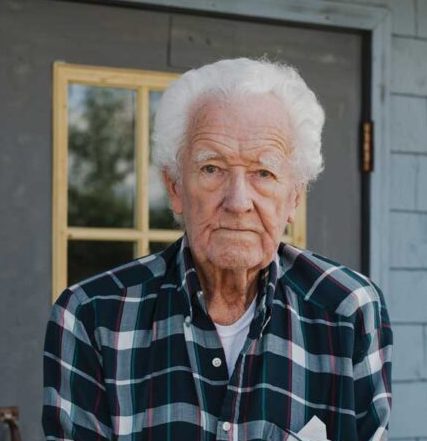
Lyn Mikel Brown (great grandaughter of Henry Mansfield and daughter of Linwood and Diane Brown) interviewed Holly Beers for “70 Years Behind the Counter of a Small-Town General Store” in Downeast Magazine’s special November 2021 issue, 70 over 70.

The Inside Story of Werner Horn, the German reservist who attempted to blow up the railway bridge between Vanceboro and St. Croix, New Brunswick in an effort to interrupt the transportation of military supplies through St. John during the Great War. This 1918 article from The World’s Work Magazine follows Horn’s journey and his effort to do the job without causing personal harm to locals. You can find a recent news clip about the event here.

In 1995, Phil Crandlemire wrote an article about the event for the Waterville Sentinel using information shared with him by his father, who met Horn as he was being held in the jail at the time in Vanceboro, as well as historical information curated from the Maine State Archives.

A memoir by Jud Hale, once editor and publisher of Yankee Magazine. Hale spent a good bit of his childhood in Vanceboro at the experimental farm, school and laboratory his wealthy parents built as an American outpost for the followers of Austrian education reformer, Rudolph Steiner, the founder of anthroposophy. The book offers mostly an outsider’s perspective of Vanceboro in the late 1930’s and early 40’s, but with some wonderful anecdotes and historical photographs.

A biography of Dr. Raymond L. Smith by his neice, Janie. Born in Vanceboro on January 25, 1917, Raymond (nephew of Frank Smith and Brenda Smith-Houlberg’s second cousin) graduated from Vanceboro High School and became, in time, the President of Michigan Technological University. The is the story of his adventures, from riding the rails during the Great Depression, to working as an aide in a prestigious mental institution, to exploring the Alaska wilderness and then to his Michigan Tech Presidency. A life fully lived.

Herb Gallison, Sr. was eighteen when he arrived in Vanceboro in 1928. He was hired as a yard switchman on the European and North American, which soon became the Maine Central Railroad. He married Mary Elisabeth Eales and they had two daughters and a son. As well as the railroad job, the Gallison’s owned a grocery store in town and a camp on Spednic. Herb Gallison Jr.’s memoir, edited by his daughter, author Kate Gallison, contains affectionate and humorous descriptions of Vanceboro life: Gallison, Herb. The Long Life and Pretty Good Times of Herb Gallison. Edited by Kate Gallison. Lambertville, N.J. Mystic Dog Press. c1992. [University of Maine, Raymond H. Fogler Library].
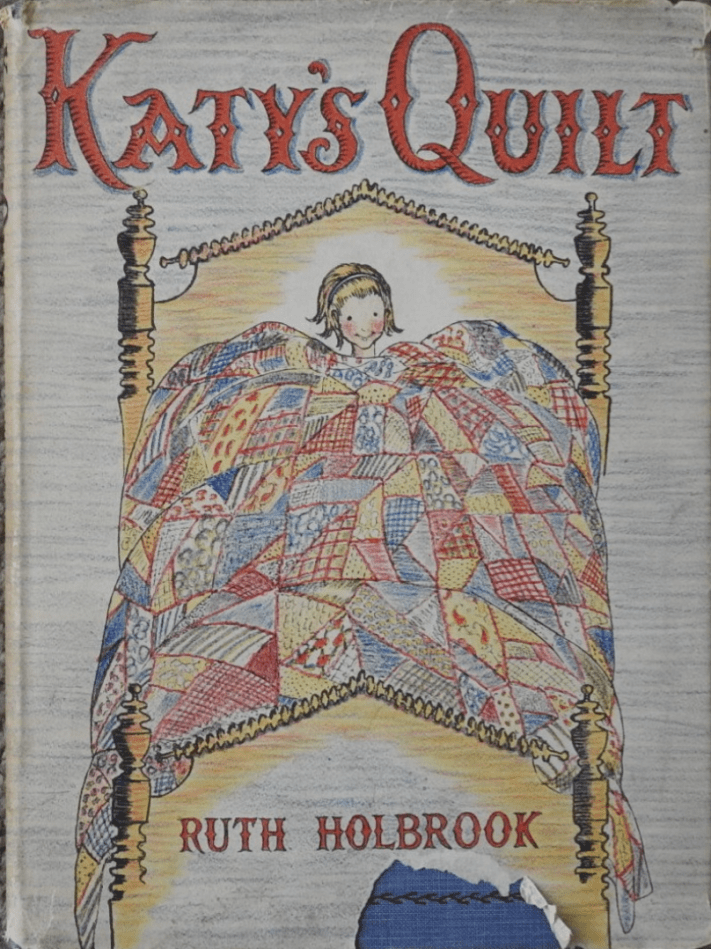
Ruth Holbrook (1886-1993) was the youngest of three daughters born to Louisa and Edward Holbrook, who ran the local Dry Goods Store (which became, over time, Holly’s General Store). Ruth graduated from Vanceboro High School and attended Colby College (1919-1921). She moved to Connecticut, where she wrote and illustrated “junior books,” the most popular of which was Katy’s Quilt, published in 1940 by Doubleday, Doran, & Co. of New York. Beautifully illustrated by Ruth, herself, the story depicts an exuberant young girl living in Vanceboro just after the Civil War as the town celebrates President Ulysses S. Grant’s commemoration of the European & North American Railway connecting Canada and the US.
 Vanceboro Historical Society