Lyn Mikel Brown
The term “custom house” is now considered a historical anachronism, but at one time such houses were a key source of funding for the early federal government. They played an important roll collecting taxes and regulating commerce. They housed offices for the government officials and inspectors who processed paperwork for the import and export of goods and fought smuggling and revenue fraud. They were located in key seaports like San Francisco, New York and, in Maine, Portland and Bath. Vanceboro’s Custom House was a sign of the importance of the town as an international port of entry.
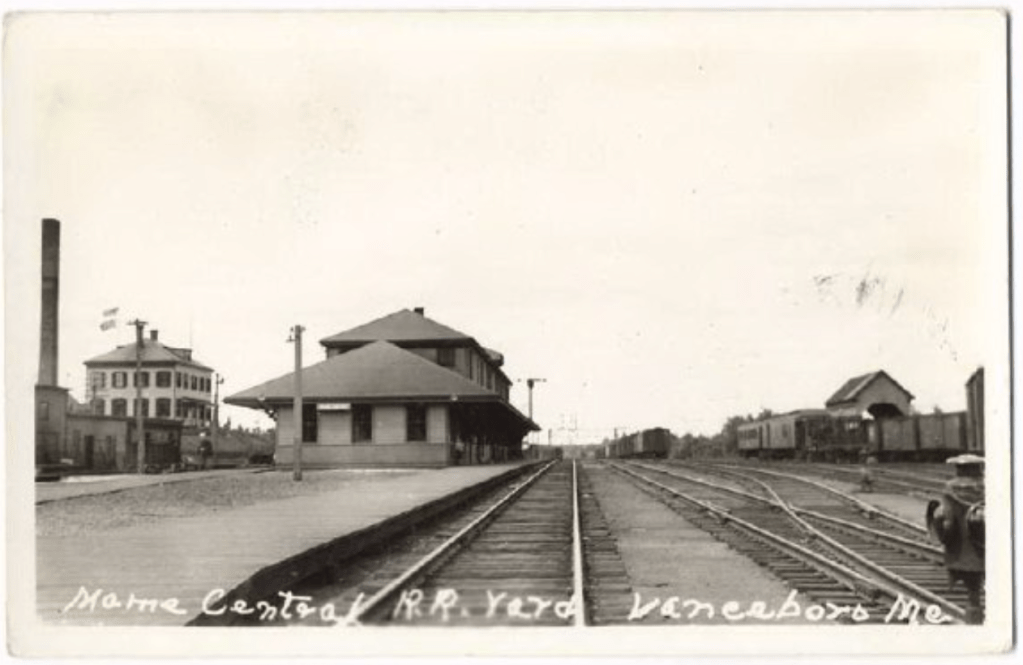
In nearly every historic photo of the railroad station and yard, the Vanceboro Custom House looms large. The impressive two story clapboard building housed offices and the second floor residence of the Port Director. The front entrance to the building was on Railroad Street. Large doors and a set of stairs at the back of the building connected the custom house to the railroad station.

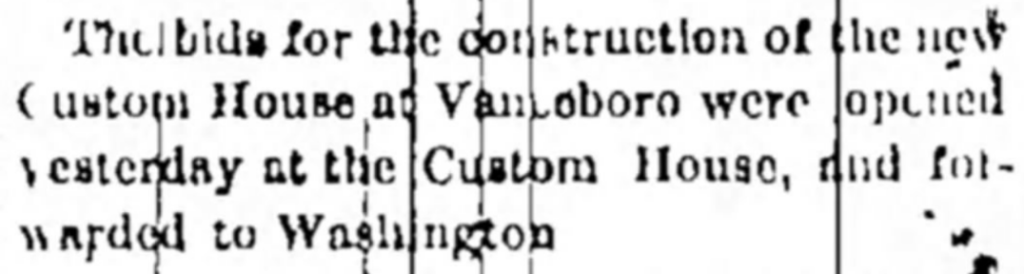
The May 29, 1884 issue of the Bangor Daily Whig and Courier reported opening bids for the Custom House had been received and forwarded on to Washington D.C.
The impressive building went up soon after, seen clearly in this 1890 photo of the first Vanceboro railway station.

After the first station burned in 1905, a second was built in the same location below the custom house.
Mary McAleney's father worked customs in the 1940s and 50's and she recalls the significance and impressive nature of the building:

"The grand building told the prominence of the port and the prominence of the Treasury Department electors. Customs was under the Treasury Department then. Immigration was Judiciary. Even I remember when they got their revenue by collecting duties and imports, before income and business taxes.

So the custom house was usually the grandest place in a town. And you look at the Portland Custom House, where it is, right there on Commercial Street. And so in Vanceboro, that was that big house up on the hill.

I remember going up to the custom house and thinking I was probably in the Capital or something. It had wide stairs, oak bannisters all polished. I remember thinking, my God, it’s just like going to see the queen. It was a beautiful building and it kind of hung on the hill and looked down on the station. Once or twice I met my dad up there and we went down the stairs to the station platform. I remember just being fascinated by those stairs because there were several stories.

Gary Beers, who lived in a duplex across the street from the custom house as a child, recalls playing in and around the building in the early 1950s.

“The lower floor of the Customs House was an office, with a hallway-lobby sort of space with huge doors front & rear. We liked to go in & creepy-mouse through, so we could go down the outside stairs to the railyard level."
Now, with air travel, the increase and complex nature of international trade and technological advances, custom houses are a thing of the past, simply beautiful historical buildings. Those in Portland and Bath have been converted for other uses. Vanceboro’s Custom House was put up for sale in 1965.

Here we lose the trail. Maybe with no takers, the building was razed. We can only imagine what might have been had the building remained its stately self. Perhaps a home for city offices, post office, a hotel, the Vanceboro Historical Society.

 Vanceboro Historical Society